Women Peaking
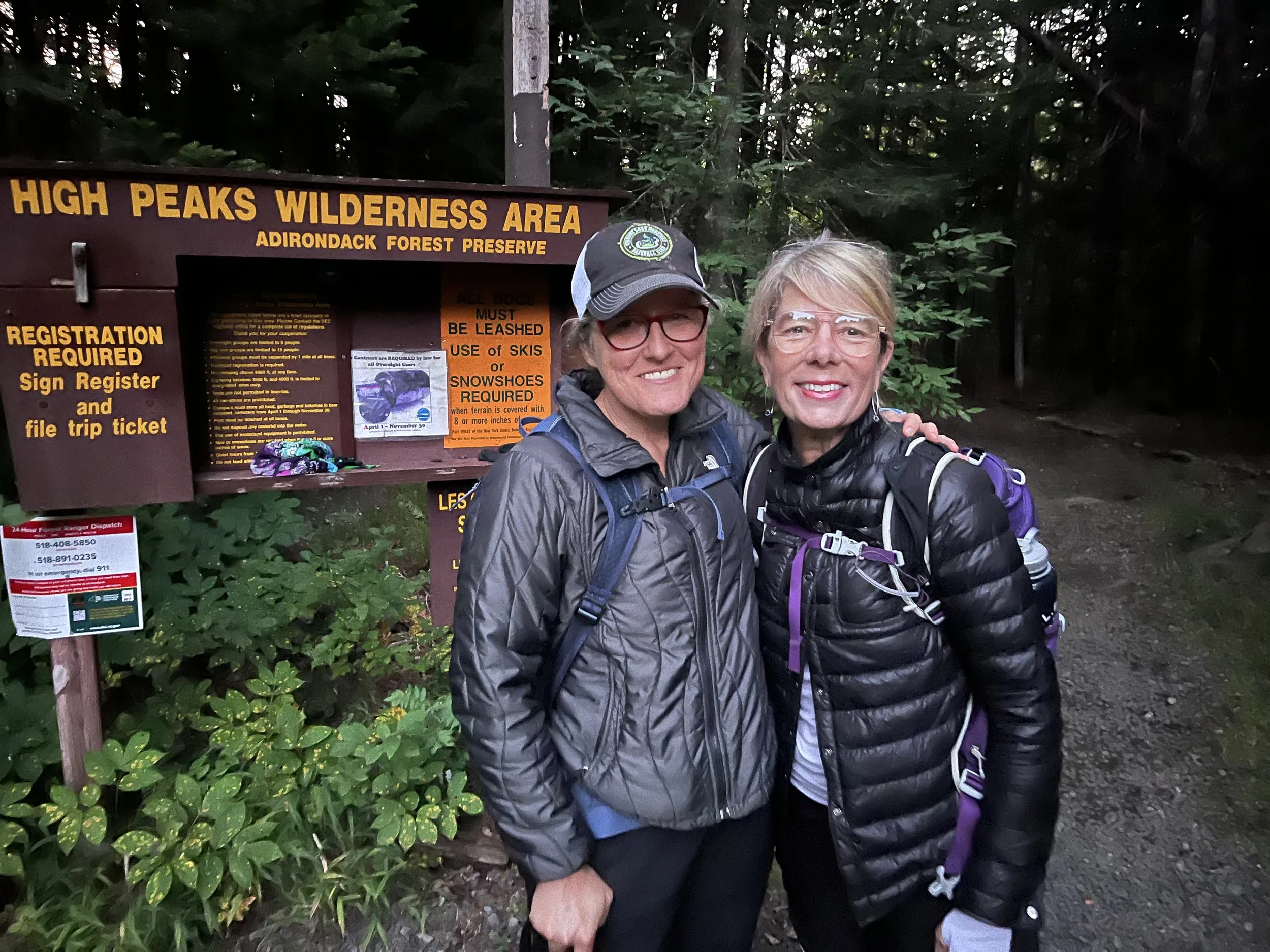
When author Loree Burns moved in next door to Michelle Maron in Westport, the two were connected by little more than property lines and the friendship of their adult sons. Now, three summers later, they are in the midst of an inspirational collaboration, an experimental mission to summit the Adirondack High Peaks and survive to share their experiences in a podcast called womenPEAKING: Friends Climbing Through Midlife.
Season two drops in October and tracks their growth through the 2025 climbing season.
Burns and Maron are getting a lot of attention in the community for their willingness to reassess what is possible in midlife. In the mountains, they embrace challenges despite their lack of experience and perceived limitations in an environment where risks are deadly. In the studio, they talk about topics others avoid, sharing things that fulfill a need and make listeners feel seen.
In March, Adirondack Explorer published an excellent piece by author Tim Rowland highlighting their trail-breaking collaborations and conversations, noting that “their hikes are recounted against a backdrop of empty nests, menopause and caring for and losing elderly parents”.
In April, Burns and Maron entertained a full house at The Grange in Whallonnsburg. Adirondack Life recently published “The Reluctant Hiker”, a hyper-observant personal essay penned by Burns.
Both women may humbly minimize their ability to connect with audiences and affect their community. But anyone who listens to their podcast, or reads Burns’ work, or attends a yoga class or forest therapy session with Maron, can quickly conclude that their work is compelling, if not important, even healing.
Burns and Maron are more scientists experimenting than ambitious athletes. Their experiences are relatable because they intelligently observe themselves and articulate their ideas and feelings in a way that conveys care, authenticity, and vulnerability. Their conversations demonstrate a willingness to be wrong and to laugh at and forgive themselves when they make missteps on a journey to find the truth of things.
In short: Warmth + Competence + Confidence = Charisma.
Add some empathy, and you have Women Peaking, people who lead by learning, two very different personalities who make a great team.
I spoke with Burns and Maron earlier this year as they were working on a new training routine to prepare for their third summer of climbing. Pieces of our conversations are included below:
_____________________________
How has hiking played a role in providing you an outlet for artistic expression?
Maron: The podcast has really been this crazy, creative outlet because it allowed us to talk about all these things that no one's talking about or not many people are talking about in this community.
And it’s creative in a way that surprised me. It's made me really learn about how I communicate with other people, because I sometimes do not see how I'm communicating in a way that is not helpful to either person, and it's really created some clarity for me. So that's been amazing.
Burns: I just have a whole different take on what artistic expression means now. I actually think decisions like where you decide to live, how you live your daily life, where you put your energy. I think of those as expressions of who I am as an artist. And so my answer now is absolutely. I mean, what I'm learning about being tough when I climb these mountains is definitely a part of how I approach what I make in this world, which is mostly writing. What I'm thinking about on the page is very much influenced by where I go and what I do and how I spend my time and where I put my body and what I'm paying attention to; all of that feels very artistic to me.
What have you learned from this project?
Burns: One of the things I've learned is that it is okay to be a student again. Sometimes it's preferable to not know the ins and outs. I think some of the questions that we end up asking and some of the avenues that we end up exploring, especially in podcasting, we might not have if we knew more. But they generally work out well for us.
Because I often write for kids, who don’t have as much experience as an adult, it’s great for me to not know everything about a topic. If I’m writing about honeybees, for example, it’s good that I’m not a honeybee biologist, because that means I’m likely to have many of the same questions my young readers are going to have.
How has your exploration of the high peaks and podcasting made you feel different about our place?
Burns: When I first moved to the Adirondack Park, I thought of it as a temporary move. A situation fell into my lap, a nice rental opportunity, and I took it, even though I planned to eventually move to Vermont, where I have some family and where I teach. But this hiking and this podcasting and the relationships that have sprung up around them are changing all that. I'm settling down and planning to stay. I think that has a lot to do with the place itself. I've never lived in these kinds of mountains. I've never lived this close to a lake of this size. And being between the two is really unusual. I love it!
Maron: I am amazed at how difficult these hikes are. So it makes me feel like I'm honoring a place. Because I've lived here for 25 years and people used to say to me very casually, ”Yeah, I got my 46 done.” And I used to think, ‘Oh, gosh, I could do that in a second.‘ And I can't! I should have started way earlier. So I am just appreciating our place.
When Loree and I have been out, and we're just in the middle of who knows where, and not seeing anyone, I think I really connect with the Indigenous people because it's such an extraordinary place. Can you imagine what you had to know and how you had to function? It's almost mind-boggling. What kind of person could live in that wilderness and have a life?
I have a whole new appreciation for the Adirondacks and how it's been conserved. It's extraordinary!
How has your friendship developed through hiking?
Maron: We weren't really that close before. She only came here because her son is my son's best friend. I didn't know her before she started to rent the house next door. I've only known her for going on three years. What's ironic is that we became like best friends within a very short time.
Now that we're hiking, the trust factor is huge. And we're so different. I thought we were so similar, but we are so day and night. It's been really interesting because I work on such a different level than she does. She writes everything down, is very detailed, and wants to know every single move we're going to make. I'm like, ‘Let's go.’ Both are good, and it's complementary
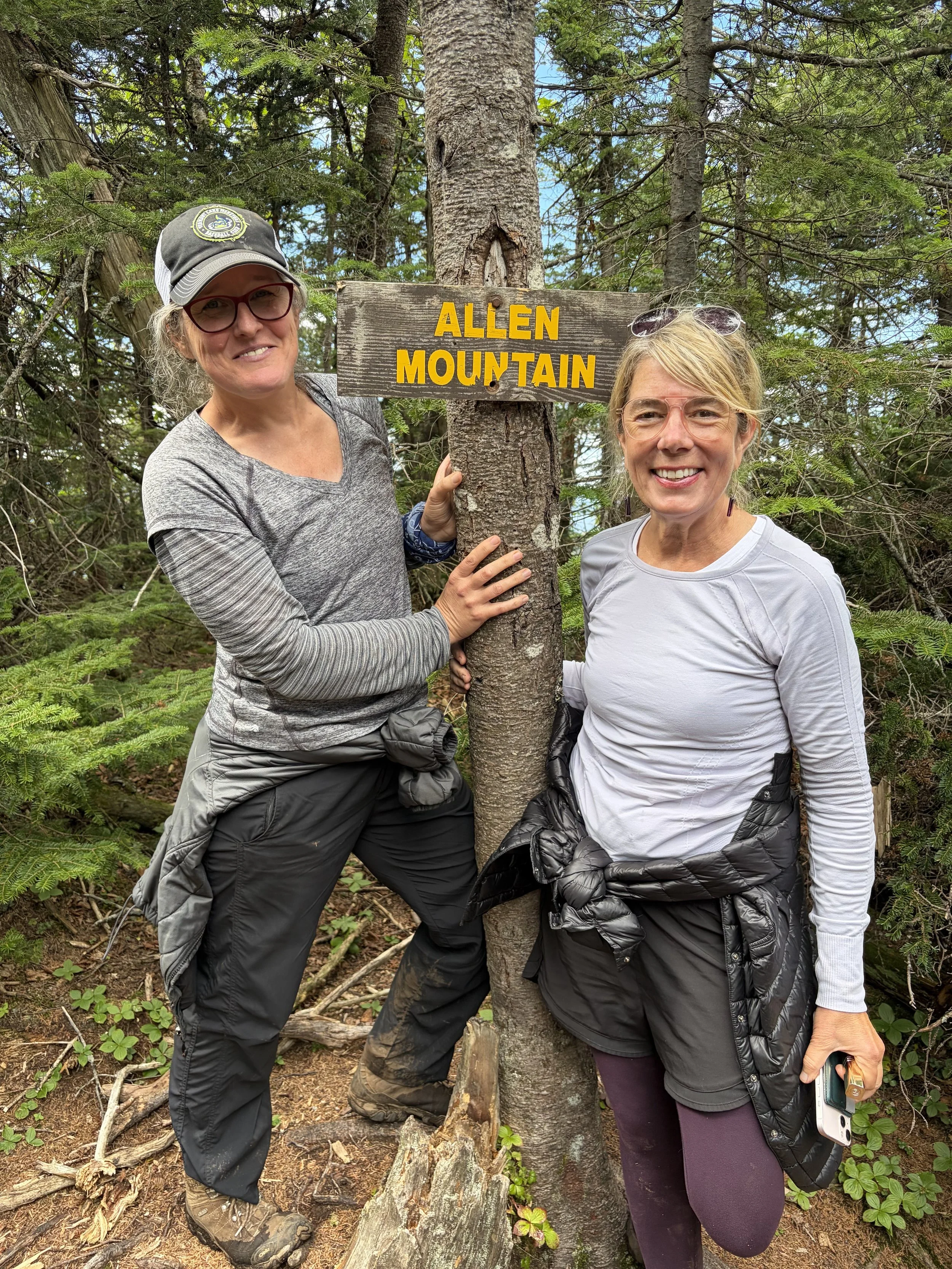
When we got caught on Rocky Peak in the dark, that's when our being two very different people really paid off. I wanted to go off the trail. She wanted to stay on. I was pretty adamant about going towards the light, and it was good that I didn't. I listened to her. I held the headlamp and forged forward for two hours. I couldn't see anything in front of me. And she was behind me. She let me lead the way as we looked for the blazes, which we could barely find. And if we hadn't had each other, we would have both been in freak-out mode. We really worked together well.
Have you been surprised at all by who you're attracting?
Maron: I didn't really think people would even like it. I don't know why. I think it's because it was a labor of love. You know, anything you do artistically, you're not thinking about other people liking it so much as you doing it for the reasons you do it. And so, for people to like it, it's just amazing. It makes me so happy.
Burns: My storyline in the first season has been a lot about divorce. People are certainly interested in the hiking, but I’m learning that they are just as interested in hearing about a midlife reinvention and what opportunities midlife can present for a person. This surprised me. I really thought our listeners would be all about the hiking.
Do you find that people are looking for intention in this part of their lives?
Burns: I think so. Intention and camaraderie and just some examples of how you could approach it. And I think anyone who listens to the first season will know that I've been a skeptic the whole time. I've been very unsure about taking on something like the challenge of these 46 high peaks. It's just not something I thought I could do at this stage of my life. I think some people are just coming and listening and maybe finding a way to think differently about the stories we tell ourselves about who we are, and what we can and can't do.
Have the hikes made you reflect on happiness in other ways?
Maron: Oh, for certain. I think with everything that's happening in the world, the only place to be is in nature. That's pure happiness. I've become a forest therapy guide, and that has been extraordinary. That's pure happiness too.