TAKE ME TO CHURCH
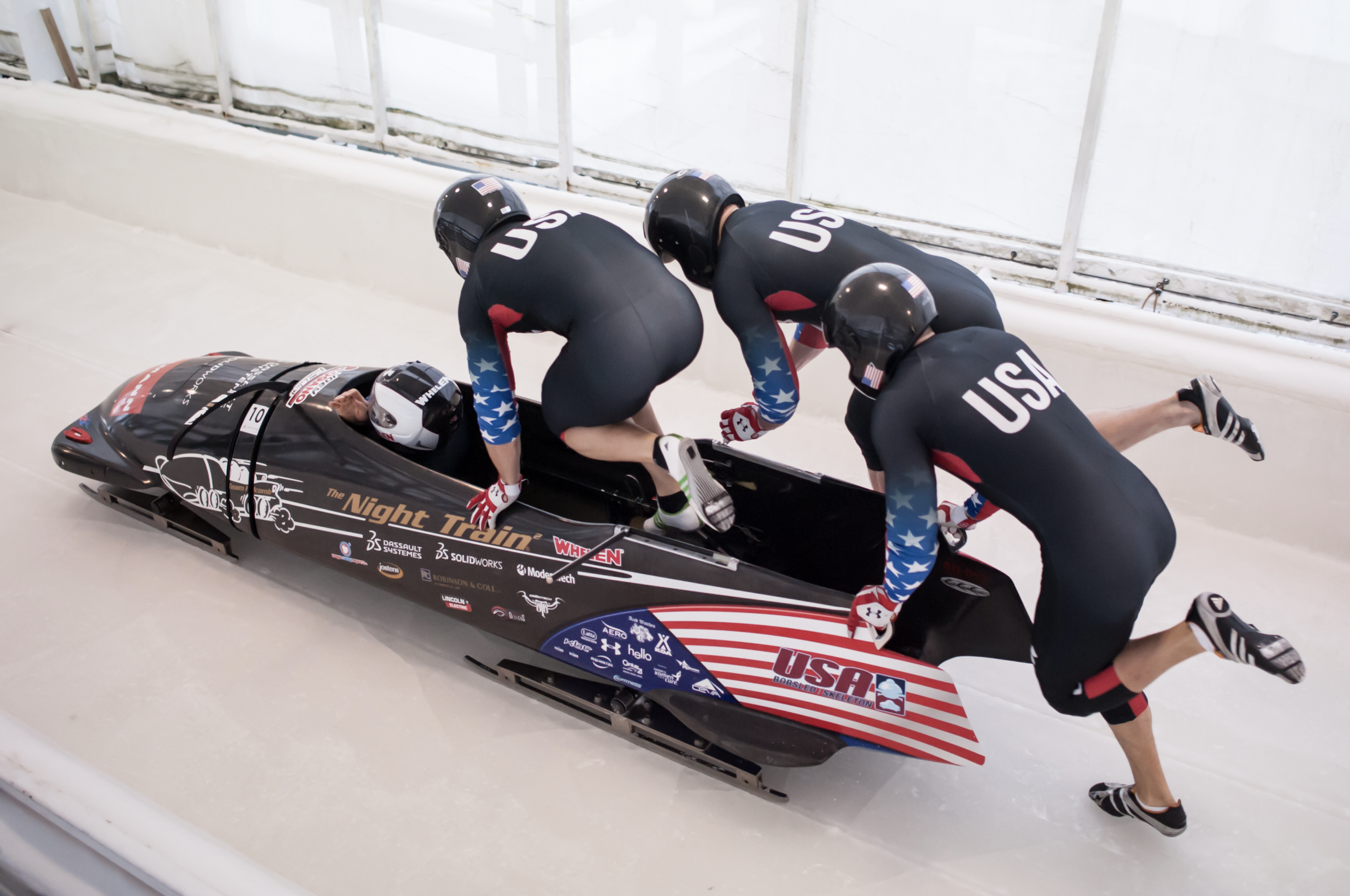
“I'm not really a drinker, and I don't do drugs, but I imagine the feeling I used to get was better than any drug in the world. So sometimes I like to reflect on the euphoria of being in complete control and having no control at the same time.”
Hunter Church
Olympian, Beijing 2022
Bobsled Pilot, USA 1
Hunter Church.
It’s a name with ambition or intention:
To be strong and sturdy, and lasting.
Worthy of praise, maybe.
Something to grow into,
or live up to, probably.
Is it a name for one born to fulfill some destiny?
If it were your name, what could you be?
How big would you dare dream?
What if you had a movie star chin,
the confidence of one who attained their dreams,
and hair like a superhero,
or a Lego figurine?
And what if you were an Olympic athlete?
A bobsled driver who qualified twice,
competed in Beijing
and retired in 2024 after hip surgery.
Then you’d be THE Hunter Church.
Resident of Cadyville.
Member of the City of Plattsburgh Fire Department.
A 3rd-generation bobsledder who fell in love with the sport at age seven, thanks to an ORDA program available to kids in the North Country.
I first met Hunter in 2016, when I coached other athletes in a Plattsburgh gym where he was training. His curiosity, gravitas, and wisdom struck me as unique. He was only 20! Strong. Hungry. Doing everything necessary to fulfill his Olympic dream. He was self-aware. He knew who he was and where he was going.
“It takes commitment,” Church says.
“The hardest part about driving a bobsled is understanding that it's not a skill that you just pick up.”
“It's a five-to-six or eight-year process of acquiring a very niche set of skills. So you have to love it.”
“It's not like driving a car or a snowmobile. There's really nothing like driving a bobsled.”
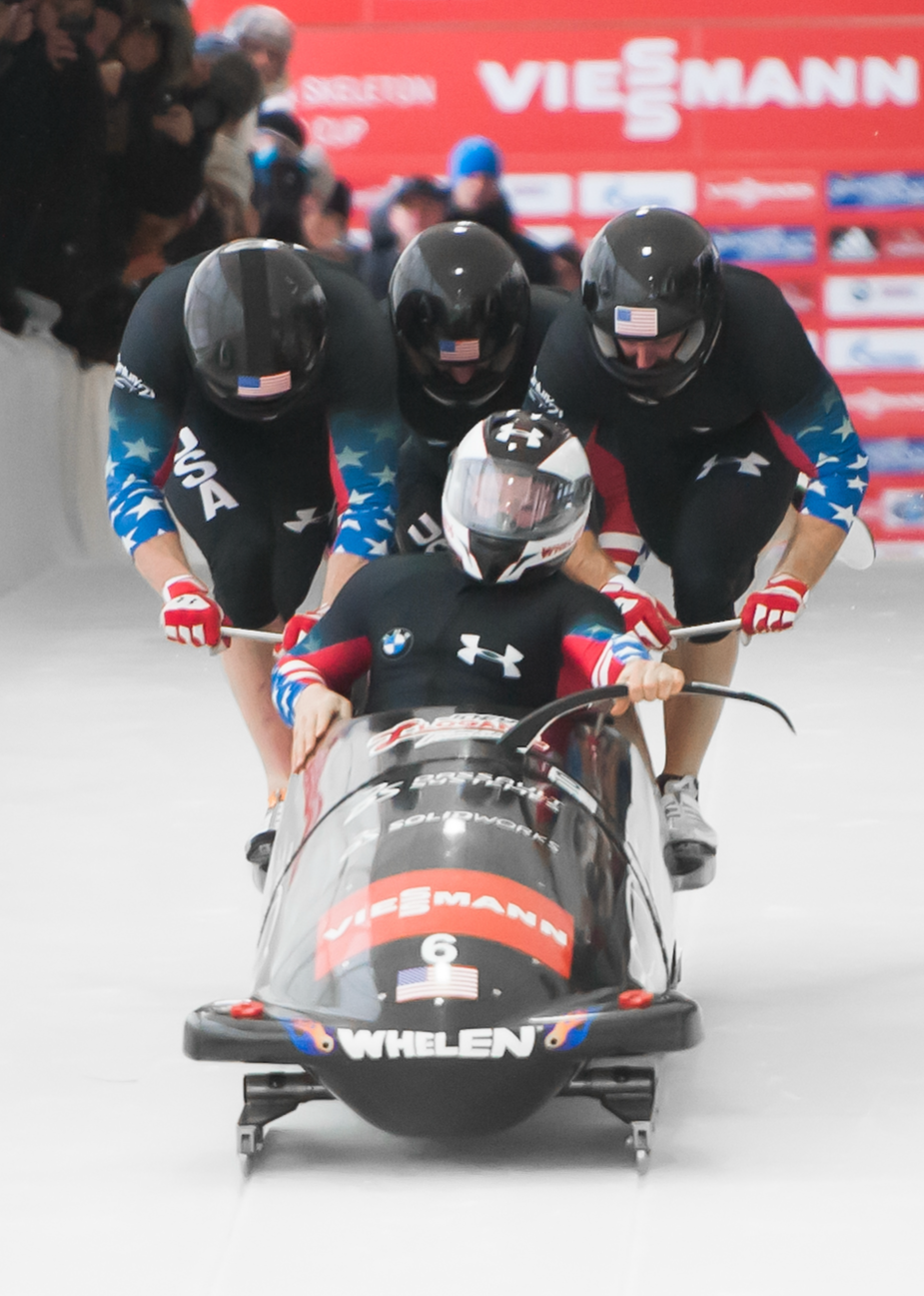
“If I were to stuff you in a trash can and push you off the side of Whiteface Mountain, that's pretty close to what a bobsled ride would feel like.” Church laughs. He’s barely exaggerating. “And some people who have ridden with me said it's actually worse!”
Bobsledders, cornering at 75-90mph experience 4-6 Gs of force. That’s 4-6 times their own body weight! It's intense and violent! Ask SNL’s Colin Jost or retired NFL star Jason Kelce. “I was not prepared for the level of terror,” Jost said, “I thought my back was going to snap in half.”
Or check in with a tourist who jumped in a sled for a dry run in the summer, like me. I don’t remember much. Blacked out possibly. The most joyous part of the turbulent ride was the relief from fear and pain at the finish.
“The feeling I'm chasing is riding on the edge of losing control,” Church recalls. “Some of the fastest trips that you will ever take, you are literally within inches of crashing at 80 miles an hour.”
“I can feel my hands,” Church says as he reminisces about driving.
“For me, it’s a minute of zen, and peace and quiet, even though it's one of the most chaotic and hectic things.”
“I'm doing less and less as I go down the track.
I'm relaxing.
I'm not steering as much.
I'm kind of gently guiding the sled.
And the sled is doing most of the work for me.
I'm there to do just enough to prevent the sled from crashing.
I just hear the wind whistling through my helmet and through the sled.
And maybe the slight chatter of the runners on the ice.”
“I’m sure that paintings and some of the best art are done in the same fashion. Artists aren’t necessarily thinking about the precise edge, they're just kind of allowing their hands and their mind to synchronize, and let what’s in their heart come out.”
So is sport more science or art?
“Obviously, science is real. Science is a very prevalent part of the sport, especially when it comes to the aerodynamic aspects, and the principles of physics that apply.”
And…
“Absolutely. Sport is an art.” Church says, noting that the art versus science question has been debated amongst some of the best bobsled coaches and athletes for the past 30 years or more.
“It has to be. Sport can’t be work. If it becomes work, it becomes a job, and it’s not fun. Art IS fun. I know it’s work for some, but I think they love it too. I think if you treat sport like art, then it’s from your heart and your soul.”
“It's choreography on ice,” Church says about his preferred discipline, the 4-man bobsled.
“There's something to be said about four large men in skin-tight suits jumping into a bathtub.”
“Now that the Olympics are here, I spend more time reminiscing about some of the challenges I was able to overcome and where I ended up.
Because it was such a big part of my life for such a long time.
My first bobsled trip was at age 7. And I was driving from age 12 to about 27. So that was all I did. That's what I ate, slept, and trained for, for 15 years.”
For many accomplished athletes, the transition out of competition is uneasy. Sometimes it’s depressing. They struggle with the loss of attention, intention, and identity. Their purpose becomes less certain. They wonder if they are still special when they’re not representing their team or country. Choices of where to direct their energy can be overwhelming or understimulating, especially for athletes from sports where the risks and rewards are so extreme.
So how might an Olympic bobsled driver,
the leader of a team bonded by intensity, trust, and training,
replace the buzz of high-stakes international competition?
What strategy could one adopt to direct their obsessive, adrenaline-seeking personality into something sustainable and healthy?
“Running into a burning building has to be up there with one of the most adrenaline-filled things,” Church says. And the stakes cannot be higher. “Firefighting is a different kind of stress because it can alter lives instantly.”
Reflecting on how his athletic career prepared him for his current occupations, Church says his experience gave him the tools to succeed. The pressure and responsibility forced him to learn methods to manage stress and anxiety. And Church learned how to lead, how to bond with a team that depended on him to make sure they got home to their families safely.
Church couldn’t take the responsibility lightly.
Crashes can be devastating.
Ice burns are a real thing.
And there isn’t a leadership manual for young athletes.
Leadership is also art more than science.
Defined by each of us individually.
We are instructed by our mentors, and mistakes mostly.
And one can’t learn how TO do it,
so much as you must figure out how YOU do it.
That requires authenticity,
which requires vulnerability,
which requires real confidence.
And confidence cannot be real without competence and practice.
“I remember my first team. I had three men. One was a 28-year-old former Division-1 football player. The others were 31 and 32. One had done two tours in Afghanistan, and the other was a captain in the United States Army. And I was an 18-year-old kid on an international circuit for the first time away from home, so obviously there were some growing pains.”
For Church, the pains of bobsled were real and physical, and ultimately career-ending. But along with the scars, he carries wisdom that reinforces a belief in his ability to do hard things.
“Bobsled put me into a lot of situations where I was under significant duress.
Qualifying for Olympic Games.
Sitting in podium position with a sled one hundredth behind me.
Going to brand new tracks.
Knowing I had to perform and survive.
There are so many moments that I've been able to carry over into real life.
I have all these grounding techniques that I learned just to keep anxiety at bay.
Now I have all these different tools.”
And maybe genetics and family history are a part of what helped Church succeed?
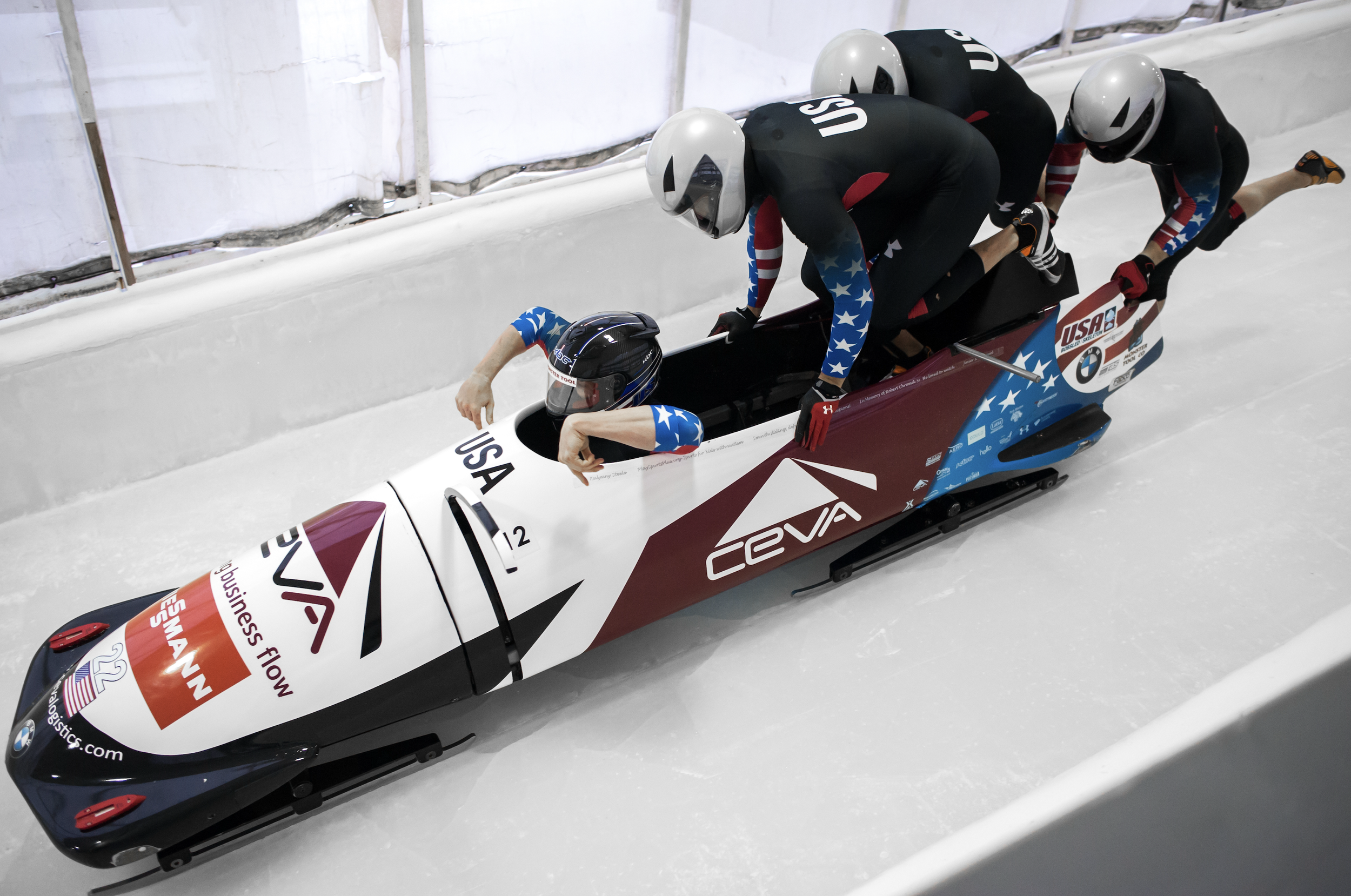
Two great-uncles competed for Team USA before and after World War II. Church’s father, who moved his family back to the Adirondack region after serving in the National Guard in Alaska, had tried out for bobsled in the late seventies or early eighties.
Fond of how bobsled altered his own life’s trajectory, Church’s father encouraged his son to take advantage of opportunities living in the north country presented to young athletes.
“Luckily, there's a program in New York State. ORDA junior bobsled program was really, really big when I was a kid. Being in the region was my chance to pursue the sport.”
Church remains active in bobsled. He works with athletes from the United States and Canada.
“I love coaching. Ultimately, I think that’s where I was made to end up.”
“There’s a lot of pressure as a coach, but much different when I’m not the one throwing myself off the side of a mountain and putting myself in peril.”
“Para-bobsled is my favorite group of athletes to work with. Their stories are amazing. Many are wounded veterans, and I have a great deal of respect for vets. My family has a military history.”
As a coach and a fan, Church considers the future of bobsled competition and how it is affected by climate change.
“Early season sliding isn’t assured,” Church laments.“I think over time we’ve seen drastic changes that will force a lot of tracks to be indoor facilities.”
As climate affects access to tracks around the world, the opportunity to pursue bobsledding, luge, and skeleton in the region will become even more unique.
Church advises young athletes to
“Find what you are good at and commit.
Think about your idols and how they conducted themselves, and try to be better.
Don’t fall into the wrong crowds.
Think about the letters on your back that you represent and how that is so much bigger than you.”
And how much bigger can you dare dream?
Can you be an inspiration to your community?
A source of pride?
One with real faith and humility?
Can you pursue your passion to the extreme?
Harness the power of gravity,
and push for pure, adrenaline-pumping speed,
to express yourself artistically?
“For me, driving was the expression of a lifetime,” Church remembers proudly. “That was my painting.”